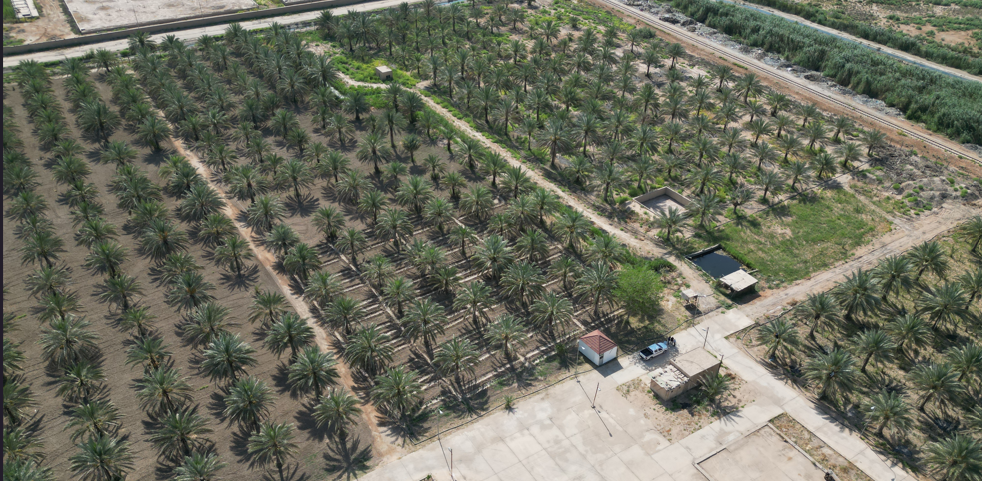
Sustainable Palm Cultivation at the University of Warith Al-Anbyiaa
The University of Warith Al-Anbiyaa continues to strengthen its environmental sustainability initiatives through the development of biomass-related resource management practices associated with its university-affiliated palm cultivation and conservation area.The palm cultivation site, located outside the main university campus, covers approximately 165,000 m². The site contains a diverse collection of date palm trees and serves as an important environmental, agricultural, and sustainability-support facility connected to the university’s long-term green initiatives.As part of ongoing agricultural and landscape maintenance activities, the palm cultivation area generates significant quantities of organic biomass materials, including palm fronds, pruning residues, dried leaves, and biodegradable agricultural waste. Rather than being discarded, these materials are reused in environmentally sustainable applications related to landscaping, agricultural maintenance, soil enhancement, and green-space management.Based on internal sustainability assessments, biomass-related practices associated with the palm cultivation area contribute approximately 3.5% of the university’s total renewable and alternative energy sustainability activities through the reuse of organic agricultural by-products and environmentally responsible resource-management practices.The initiative contributes to reducing organic waste generation, improving sustainable resource utilisation, and supporting environmentally responsible land-management practices suitable for arid climate conditions.The palm cultivation area also supports research and educational activities related to:* sustainable agriculture,* irrigation systems,* biodiversity preservation,* environmental management,* and arid-zone sustainability practices.In addition, the project contributes to community engagement and environmental awareness through activities connected to preservation of local agricultural heritage and sustainable environmental practices.The integration of biomass-related sustainability practices within the university’s agricultural initiatives reflects the institution’s broader commitment to circular resource management and environmental responsibility.These efforts contribute to several Sustainable Development Goals (SDGs), particularly:* SDG 7 – Affordable and Clean Energy* SDG 11 – Sustainable Cities and Communities* SDG 12 – Responsible Consumption and Production* SDG 13 – Climate Action* SDG 15 – Life on LandThe initiative forms part of the university’s wider strategy to promote sustainable environmental practices, biodiversity conservation, and responsible resource management across its academic and affiliated facilities.

Sustain
RECENT POST
-

Student Union
02 October, 2026
-

NGOs Collaboration
02 October, 2026
-

Outreach & Engagement
02 October, 2026