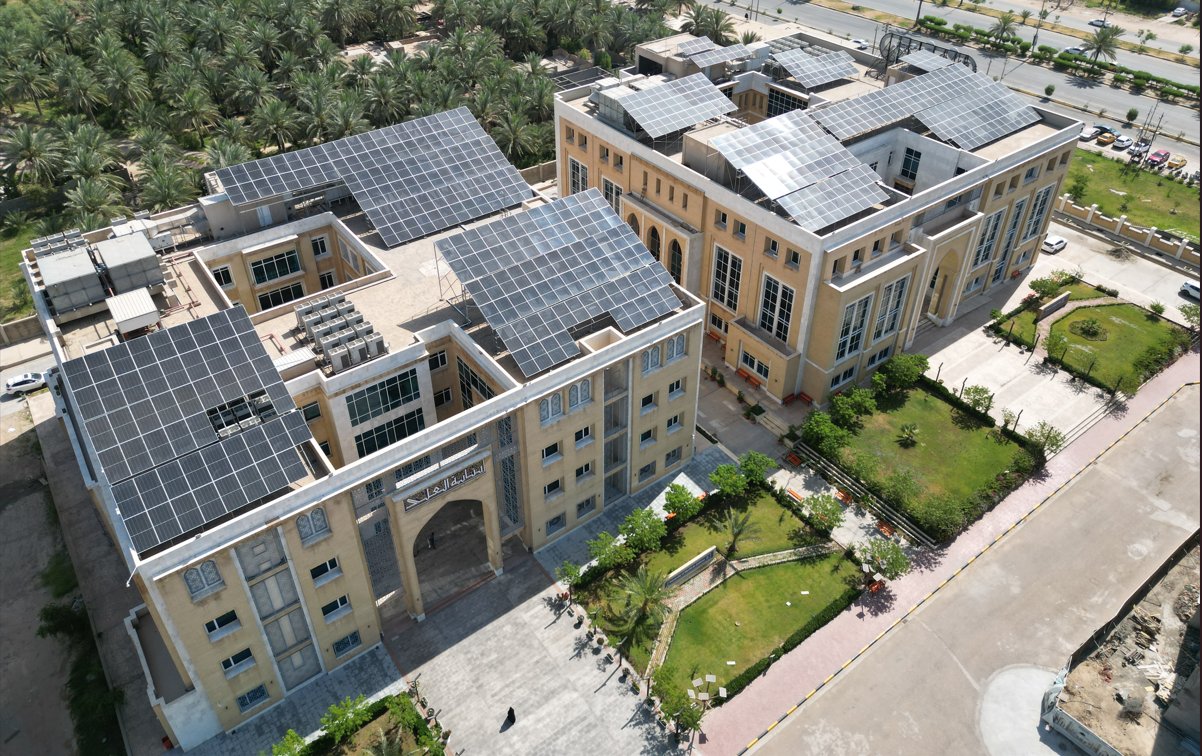
Clean Energy Infrastructure
Solar Energy Project at the University of Warith Al-Anbiyaa: A Strategic Step Toward Sustainability
Overview
This report highlights one of the University of Warith Al-Anbiyaa’s most significant sustainability initiatives: the implementation and operation of a 249 kW photovoltaic (PV) solar energy system across the university campus. The project reflects the university’s commitment to integrating renewable energy solutions into its infrastructure and advancing environmental responsibility through practical and measurable actions.
Project Objectives
The solar energy initiative was developed to support the university’s long-term sustainability strategy by:
-
Increasing the use of clean and renewable energy sources.
-
Reducing dependence on diesel-powered electricity generation.
-
Lowering greenhouse gas emissions and supporting climate action.
-
Improving energy efficiency and operational sustainability.
-
Creating educational and research opportunities in renewable energy and environmental sustainability.
Key Achievements and Performance Indicators
The report presents verified data demonstrating the project's positive impact during its initial operational phase, including:
-
Generation of more than 134,000 kWh of clean electricity within five months.
-
Savings of over 33,000 liters of diesel fuel during the same period.
-
Significant reduction in generator operating hours, leading to lower noise and air pollution.
-
An estimated annual reduction of approximately 215 metric tons of CO₂ emissions.
-
Enhanced energy security and improved reliability of campus operations.
Environmental, Economic, and Educational Impact
Beyond its environmental benefits, the project contributes to substantial operational cost savings by reducing fuel consumption and generator maintenance requirements. The solar installation also serves as a living laboratory for students and researchers, providing real-world opportunities to study renewable energy technologies, energy management systems, and sustainability practices.
Furthermore, the initiative supports the university’s mission of fostering environmental awareness and promoting a culture of sustainability among students, faculty, and staff.
Contribution to the United Nations Sustainable Development Goals (SDGs)
The project directly supports several Sustainable Development Goals, including:
-
SDG 7: Affordable and Clean Energy
-
SDG 9: Industry, Innovation and Infrastructure
-
SDG 11: Sustainable Cities and Communities
-
SDG 12: Responsible Consumption and Production
-
SDG 13: Climate Action
Through these contributions, the University of Warith Al-Anbiyaa demonstrates the vital role of higher education institutions in advancing sustainable development and addressing global environmental challenges.
Towards a Greener Future
The solar energy project represents a major milestone in the university’s sustainability journey and reinforces its vision of becoming a leading green campus in Iraq and the region. By investing in renewable energy, the University of Warith Al-Anbiyaa is not only reducing its environmental footprint but also empowering future generations with the knowledge, innovation, and responsibility needed to build a more sustainable future.

Sustain
RECENT POST
-

Student Union
12 October, 2026
-

NGOs Collaboration
12 October, 2026
-

Outreach & Engagement
12 October, 2026