Health Outreach Programmes
-1Free Cardiac Screening for 400 Children
UOWA Launches Humanitarian Initiative: Free Cardiac Screening for 400 Children Across Karbala Schools
- Date:27/1/2025
- Number of participants:400 Children
- Target group: Children aged 6–12 years.
- Location:Karbala Schools
- Partner: Various schools in Karbala.
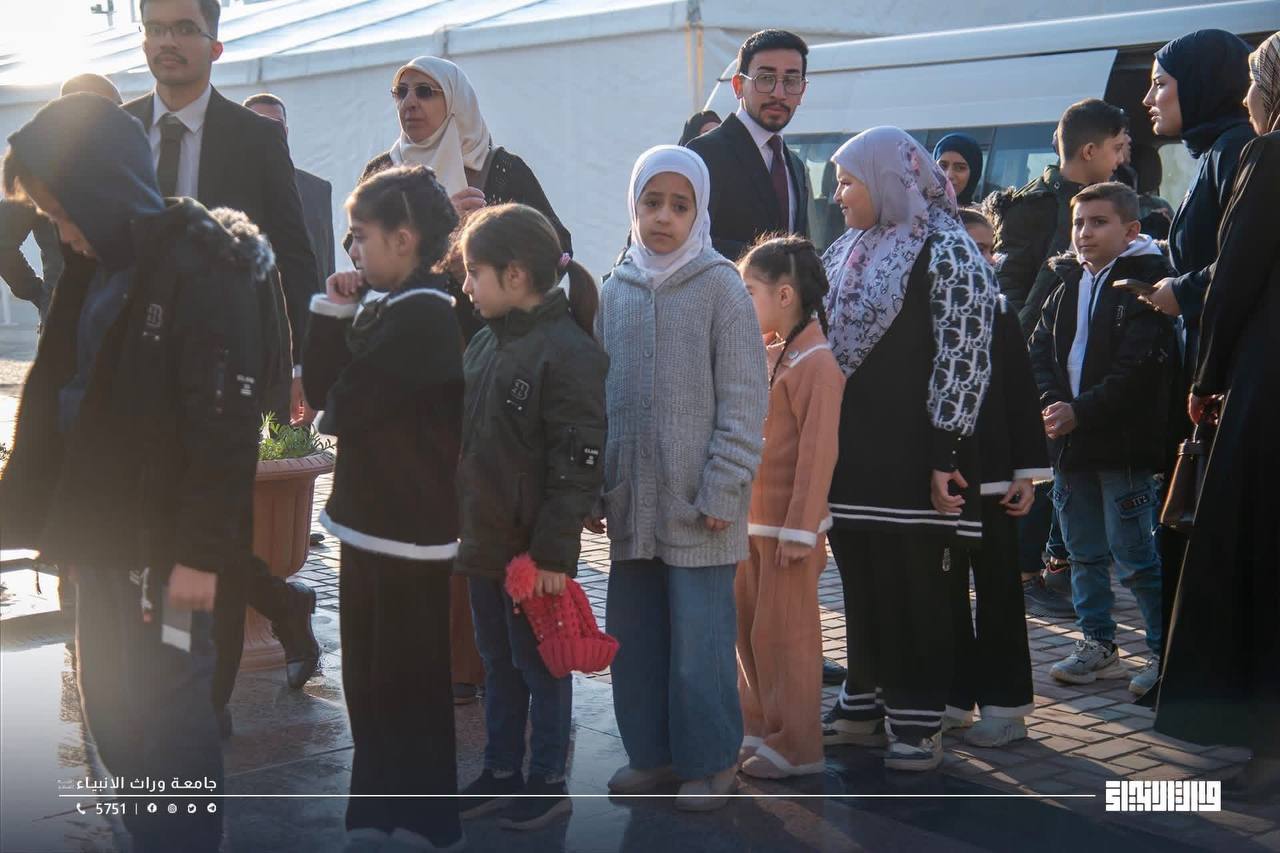
On the sidelines of the 12th International Al-Imamia Conference, the University of Warith Al-Anbiyaa (UOWA) launched a distinctive humanitarian initiative involving free, comprehensive cardiac screenings for more than 400 children from various schools across Karbala Governorate, as part of the university's commitment to child health and the early detection of heart diseases.
This initiative reflects the central humanitarian and community-oriented role embedded in UOWA's mission, and its dedication to supporting the population segment most vulnerable to health risks by providing essential healthcare services free of charge.
The initiative also demonstrates the College of Medicine's commitment to its academic and humanitarian mission, and its continuous efforts to link scientific activity with direct community service. The screenings brought together specialized cardiology medical teams who provided examinations and medical consultations to the children and their parents.
This initiative forms part of a series of recurring community health activities carried out by UOWA, directed toward various segments of society particularly children and the most vulnerable social groups with the aim of raising health awareness and promoting early disease detection.
This effort further affirms the university's leading role in community service and in achieving the United Nations Sustainable Development Goals, particularly SDG 3: Good Health and Well-being.
-2Blood Donation Campaign Karbala Central Blood Bank
- Date:13/11/2025
- Number of participants:185
- Target group: Students, teaching staff, and the community.
- Location: University of Warith Al-Anbiyaa
- Partner: In collaboration with the College of Nursing and the Karbala Blood Bank Center.
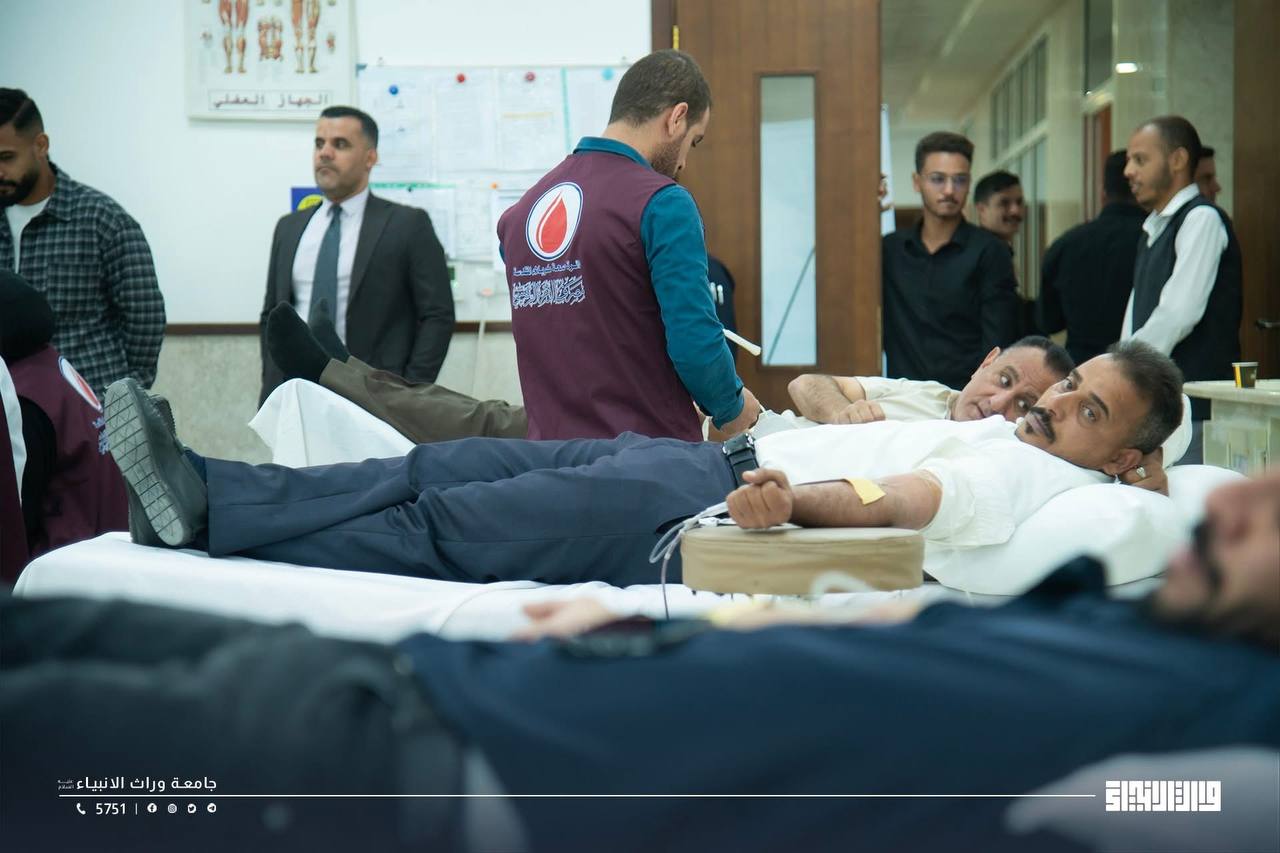
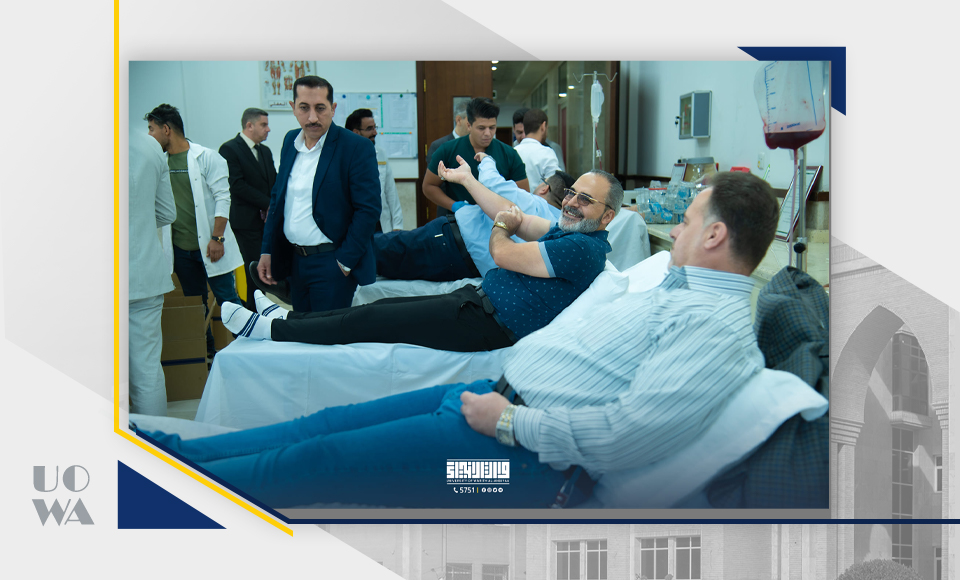
Under the direct supervision of Prof. Dr. Ibrahim Saeed Al-Hiyawi, President of UOWA, the College of Nursing organised a community blood donation campaign in collaboration with the Karbala Central Blood Bank. The campaign witnessed broad participation from UOWA students, academic staff, and administrative employees, reflecting a university-wide commitment to community service and social solidarity. It aimed to promote a culture of voluntary blood donation as a life-saving act, while strengthening the partnership between the university's health colleges and the official health institutions of Karbala Governorate. The College of Nursing provided technical and logistical support, with students and faculty participating in blood collection procedures under proper clinical supervision, combining community service with practical health training
-3Preventive Health Education for Disadvantaged Students Ali Al-Asghar Secondary School for Orphans
- Date: 17 March 2025
- Number of participants: 260
- Target group: Children without parental care
- Location: University of Warith Al-Anbiyaa
- Partner: collaboration with an Orphans’ Foundation
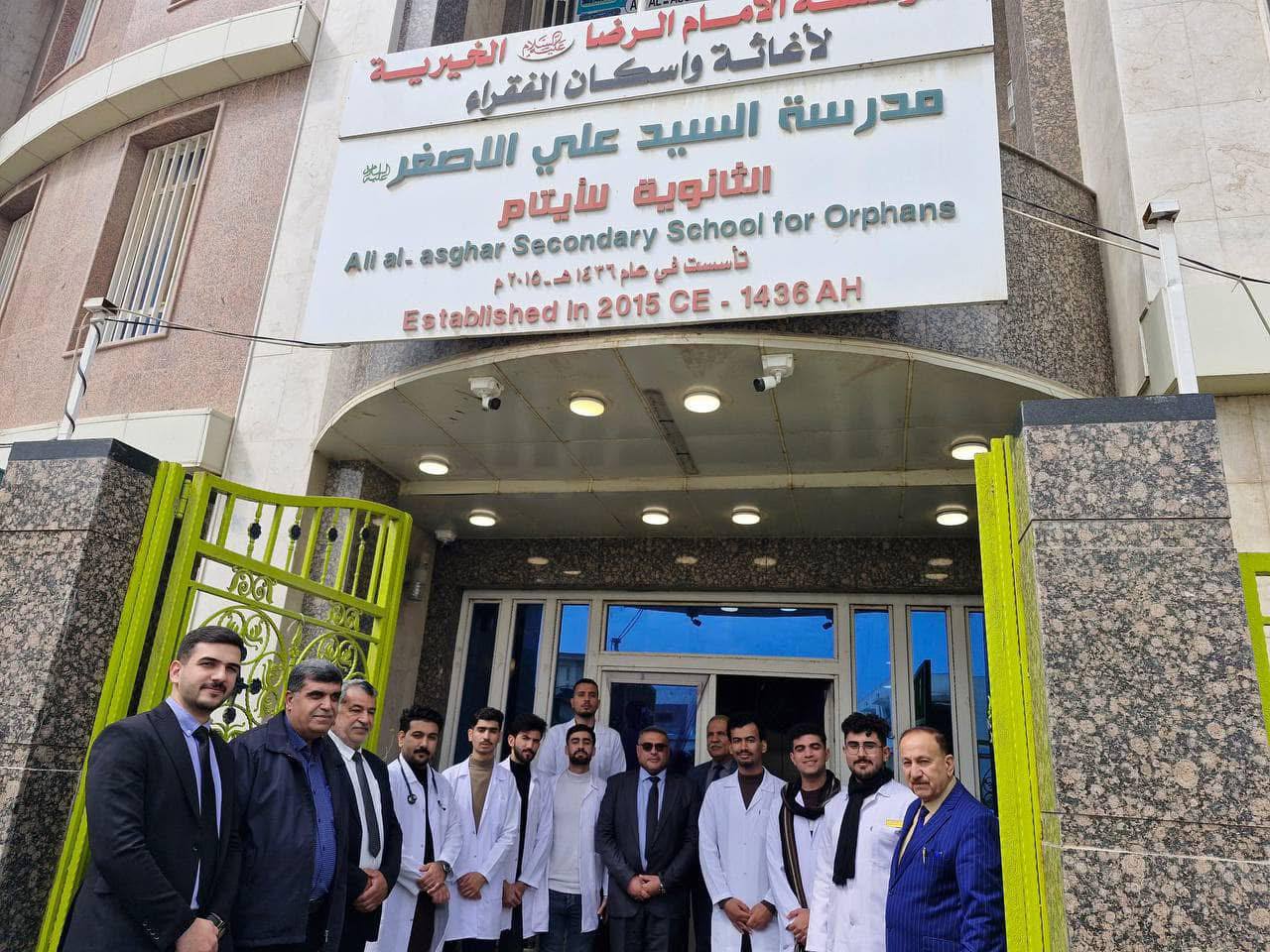
As part of its commitment to community social responsibility and the promotion of preventive health culture, the College of Medicine at UOWA organised a field visit to a number of schools across Karbala Governorate, including Ali Al-Asghar Secondary School for Orphans demonstrating UOWA's targeted outreach to disadvantaged and vulnerable populations. The visiting team of academic staff and students delivered educational lectures on personal hygiene, disease prevention practices, healthy daily habits, and methods to avoid common and infectious diseases among school-age children. Participants received health education materials and were encouraged to adopt sustainable healthy behaviours, with school principals engaged as partners in reinforcing these messages.
4-Warith Al-Anbiyaa University Provides Free Vaccinations to Displaced Children
30 June 2025 | Najaf Road, Karbala
- Date: 30 June 2025
- Number of participants: 150
- Target group:Displaced Children
- Location:Najaf Road, Karbala
- Organizing Unit :College of Nursing
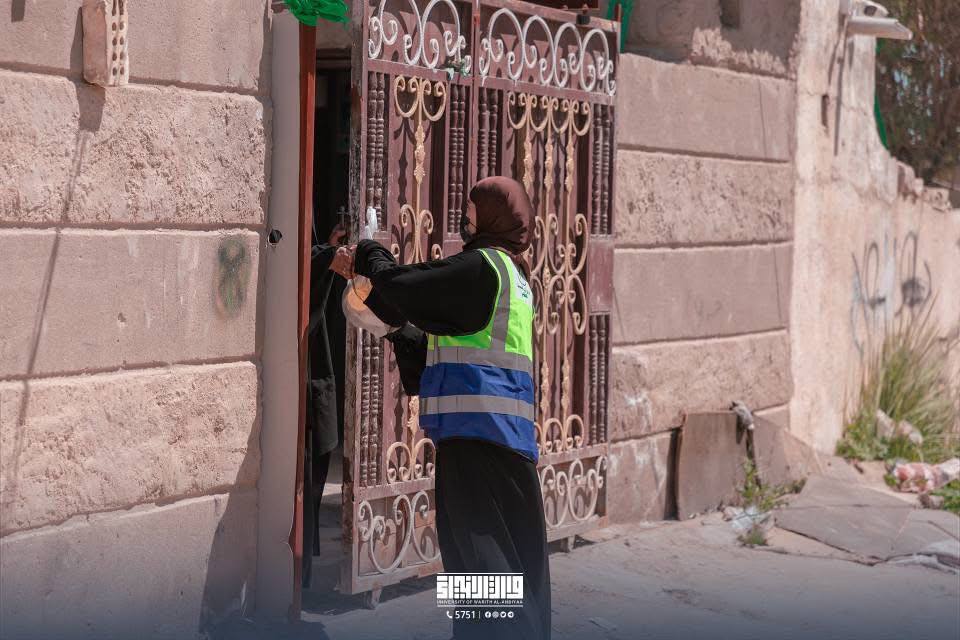
As part of its commitment to social responsibility, community engagement, and the United Nations Sustainable Development Goals (SDGs), Warith Al-Anbiyaa University, through its College of Nursing, organized a humanitarian health campaign to provide free vaccinations to displaced children residing along the Najaf Road in Karbala.
The campaign aimed to support the health and well-being of displaced children by improving their access to essential preventive healthcare services, particularly for families facing challenges in accessing healthcare.
During the campaign, free vaccinations were provided to 150 displaced children, contributing to disease prevention and promoting better health outcomes among children in the displaced community. The initiative also strengthened the University's direct engagement with vulnerable communities and promoted awareness of the importance of childhood vaccination and preventive healthcare.
Sustainability at UOWA
The University of Warith Al-Anbiyaa Sustainability Website is the University’s official platform for documenting and publishing its sustainability work. It brings together evidence, policies,
RECENT POST
-
Student Union
26 October, 2026
-
NGOs Collaboration
26 October, 2026
-

Outreach & Engagement
26 October, 2026