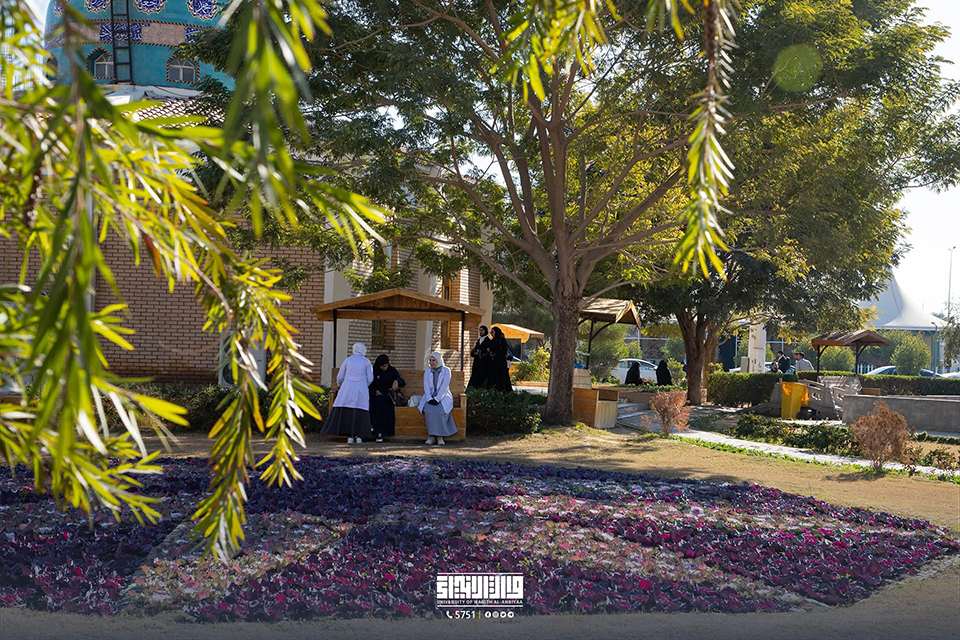
Water Conscious Planting
The University of Warith Al-Anbiyaa (UoWA) applies a water-conscious landscaping approach designed to minimise water use while supporting sustainable campus development and landscape management.
Campus landscaping incorporates native and drought-tolerant plant species, including Acacia tortilis, Salsola spp., and Teucrium polium, where appropriate to the campus environment.
The university also uses treated and recycled water, together with harvested rainwater, for suitable non-potable landscaping applications.
Water-Efficient Irrigation
UoWA uses ICT-enabled irrigation technologies to support efficient water management. Soil-moisture monitoring and automated irrigation scheduling help adjust irrigation according to landscape requirements and reduce unnecessary watering.
Reported Landscape Areas
|
Landscape / Surface Type |
Area |
Share |
|
Forest vegetation |
4,083 m² |
4.1% |
|
Planted vegetation |
35,320 m² |
35.2% |
|
Water-absorption / permeable areas |
60,886 m² |
60.7% |
|
Total reported area |
100,289 m² |
100% |
The combination of drought-tolerant planting, efficient irrigation, and the use of suitable non-potable water sources supports the university's efforts to minimise water use in campus landscaping.
The landscaping programme forms part of UoWA's wider Water Conservation Policy and its approach to sustainable campus development.

Sustainability at UOWA
The University of Warith Al-Anbiyaa Sustainability Website is the University’s official platform for documenting and publishing its sustainability work. It brings together evidence, policies,
RECENT POST
-

Student Union
26 October, 2026
-

NGOs Collaboration
26 October, 2026
-

Outreach & Engagement
26 October, 2026