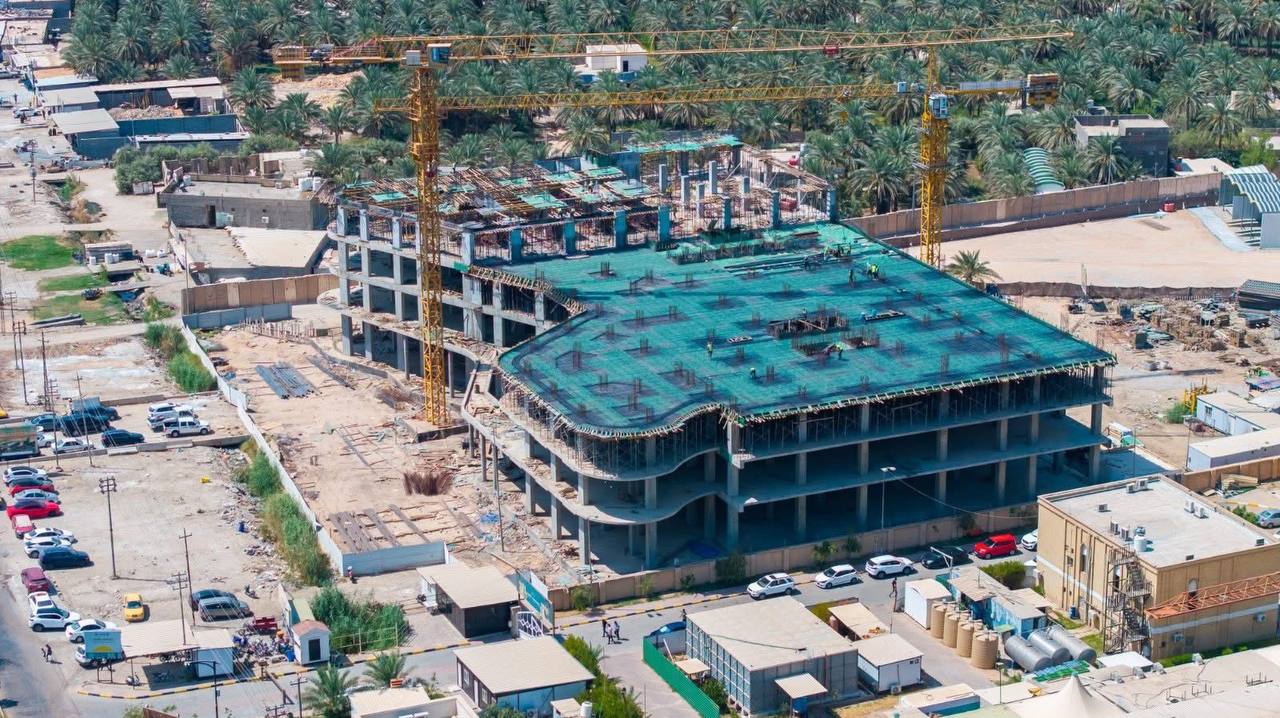
Energy Efficient Renovation and Building
The University of Warith Al-Anbiyaa has a formal Energy Efficiency & Construction Policy committing the university to ensure that all new construction and major renovations meet or exceed energy-efficiency standards. The policy was first issued in July 2022 and most recently revised in October 2025, and is reviewed annually.
|
Policy detail |
Value |
|
Policy ID |
UOWA-ECP-2025-v1.1 |
|
Effective date |
July 2022 |
|
Revision date |
October 2025 |
|
Review cycle |
Annual |
|
Governing body |
University Council / Sustainable Development Committee |
Standards Applied (Section 2)
All construction and renovation projects must comply with one or more of the following standards or guidelines, as applicable:
• Iraqi National Building Energy Code / Regulations;
• LEED (Leadership in Energy and Environmental Design);
• ASHRAE Standard 90.1 / 189.1 for building energy performance;
• ISO 50001 for energy-management systems; and
• Best Practice Guidelines for Hot/Arid Climates, covering solar shading, thermal mass and natural ventilation.
Design, Review and Approval Process (Section 3)
|
Stage |
Requirement |
|
3.1 Pre-design / concept |
Project teams present energy-saving strategies (insulation, glazing, HVAC, lighting, passive design) and a preliminary energy model comparing the base case with the proposed design. |
|
3.2 Design review and compliance check |
The Sustainability / Energy Committee reviews design documents for compliance; its feedback must be incorporated before full design approval. |
|
3.3 Construction monitoring and verification |
Periodic inspections confirm that materials, insulation, HVAC, windows and controls match the design, and that installed equipment (LEDs, motors, sensors) meets the required efficiencies. |
|
3.4 Commissioning and handover |
Systems are tested, balanced and validated against simulation; as-built energy models and performance guarantees are provided where feasible. |
|
3.5 Maintenance and operational efficiency |
Planned preventive maintenance of HVAC units, chillers and boilers; filter cleaning and control recalibration; testing of lighting controls and sensors; energy-performance checklists for each building; maintenance data integrated into the building management system; training for users and maintenance staff. |
|
3.6 Green procurement and equipment upgrades |
Procurement prioritises Energy Star, EPEAT or locally certified A-rated equipment, LED lighting, HVAC with high COP and variable-speed drives, and low-embodied-energy local materials; energy-performance criteria are included in all tender documents and vendor evaluations. |
Monitoring, Reporting and Governance (Sections 4–6)
• ICT and building-automation systems monitor energy use in real time; actual performance is compared with modelled predictions and deviations are reported with corrective actions.
• Annual energy-performance reports are issued, and incremental energy-reduction targets are integrated into the university's sustainability strategy.
• The Sustainability / Energy Committee oversees implementation and compliance; the Facilities & Maintenance Department executes operations and maintenance; project leads, architects and engineers embed efficiency in design; the Procurement Office prioritises energy-rated equipment and keeps an annual record of energy-efficient purchases and savings.
• Exceptions (for example heritage buildings or spatial limits) require a documented request to the Sustainability Committee and compensatory measures, such as solar panels or efficient systems.
Implementation Example Solar PV
Implementation Example Solar PV UoWA operates a campus solar photovoltaic (PV) system. In 2025, the system generated 178,200 kWh of clean electricity approximately 15.0% of the university's total 2025 electricity consumption of 1,188,000 kWh equivalent to an estimated IQD 21,384,000 (≈21.4 million) in avoided grid-electricity costs at IQD 120/kWh.
Policy Revision History
|
Version |
Date |
Summary of changes |
Reviewed by |
|
v1.0 |
July 2022 |
Initial policy release establishing energy-efficiency framework |
University Council |
|
v1.1 |
October 2025 |
Added standards references, refined targets, and roles & processes |
Sustainable Development Committee |
Sustainability at UOWA
The official sustainability website of the University of Warith Al-Anbiyaa: policies, annual reports, GHG data, campus initiatives, and progress on the UN Sustainable Development Goals.
RECENT POST
-
Student Union
15 January, 2025
-
NGOs Collaboration
29 September, 2025
-

Outreach & Engagement
01 October, 2025