UOWA Strengthens International Collaboration in Research Healthcare and Sustainable Development
1-Warith Al-Anbiyaa University (PBUH) hosted the 12th International Imamia Conference, with wide participation from specialist doctors representing 20 Arab and foreign countries. The conference provided a global scientific platform to exchange medical expertise, discuss the latest developments in healthcare, and strengthen international academic and research cooperation.
Key Conference Recommendations
Expand international clinical and research networks: Establish joint research programs, visiting-scholar exchanges, and clinical training fellowships between the University of Warith Al-Anbiyaa and participating medical institutions across the 20 represented countries.
Scale community preventive-health outreach: Institutionalize conference-linked humanitarian medical missions—building on the free cardiac screening of over 400 schoolchildren in Karbala-to strengthen early disease detection and public health awareness in local communities.
Promote digital health and collaborative clinical data sharing: Develop multi-center medical registries and tele-consultation channels to support ongoing cross-border consultation on complex clinical cases.
At the conclusion of the 12th International Imamia Conference, participating delegates and specialist physicians commended the University of Warith Al-Anbiyaa for fostering an international forum that bridges scientific innovation with humanitarian healthcare service. The conference reaffirmed a shared commitment to advancing Sustainable Development Goals SDG 3 (Good Health and Well-Being), SDG 4 (Quality Education), and SDG 17 (Partnerships for the Goals) by translating global medical expertise into measurable improvements in clinical education, collaborative research, and community health outcomes.
2-Evidence Title: International Systematic Review Comparing AI, IoT, and Satellite Approaches for Water Quality Monitoring (2025)
Description: In 2025, the (Department of Civil Engineering), in international collaboration with Liverpool John Moores University (United Kingdom) alongside the University of Baghdad, University of Kerbala, and Al-Mustaqbal University, published a PRISMA-guided systematic review titled Revolutionizing Water Quality Monitoring with Artificial Intelligence: A Systematic Review in the Journal of Studies in Science and Engineering (Vol. 5, No. 1, pp. 358–385, 2025; Open Access; Scopus 96th citation percentile, FWCI 1.58).
Synthesizing 1,032 peer-reviewed studies (2011–2025) to address global water security (SDG 6: Clean Water and Sanitation and SDG 17: Partnerships for the Goals), the review systematically compares alternative monitoring and modeling approaches:
- Compare data-acquisition approaches: Contrasts conventional manual field sampling against real-time Internet of Things (IoT) sensor networks (which reduce data latency by 40% when monitoring pH, dissolved oxygen, and turbidity) and Landsat-8 satellite remote sensing (which reduces field sampling costs by 60% for large-scale turbidity, chlorophyll-a, and suspended-sediment assessment).
- Compare machine learning and deep learning algorithms: Benchmarks supervised regression and classification algorithms—including Artificial Neural Networks (ANN), Random Forests (RF), Support Vector Machines (SVM), Multiple Linear Regression (MLR), Adaptive Boosting (AdaBoost), k-Nearest Neighbors (kNN), Adaptive Neuro-Fuzzy Inference Systems (ANFIS), and Deep Neural Networks (DNNs), which achieve up to 94% predictive accuracy—against unsupervised clustering and anomaly-detection methods.
- Deliver policy and governance recommendations: Proposes hybrid supervised–unsupervised AI frameworks integrated with existing water infrastructure, automated sensor-calibration protocols, and open data standards to bridge urban–rural disparities in water quality management.
Sustainability at UOWA
The official sustainability website of the University of Warith Al-Anbiyaa: policies, annual reports, GHG data, campus initiatives, and progress on the UN Sustainable Development Goals.
RECENT POST
-

Student Union
15 January, 2025
-
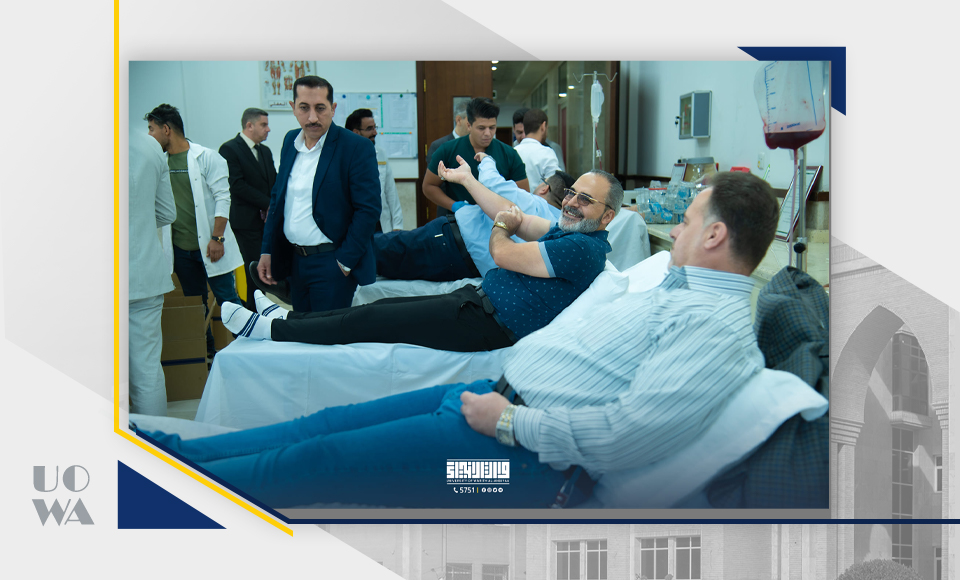
NGOs Collaboration
29 September, 2025
-

Outreach & Engagement
01 October, 2025